When does car paint need redoing?
Car paint isn’t a single layer. On top of the metal there is primer, then the base coat that carries the colour, and finally a transparent clear coat that protects it. Whether damage needs painting depends largely on how deep it goes.
- Light scratches in the clear coat only can often be removed by machine polishing.
- Scratches through to the colour or primer won’t polish out — that area needs painting.
- Peeling clear coat and fading show up mostly on sun-exposed surfaces such as the roof and bonnet. Once the clear coat starts lifting, polish is no longer a lasting fix.
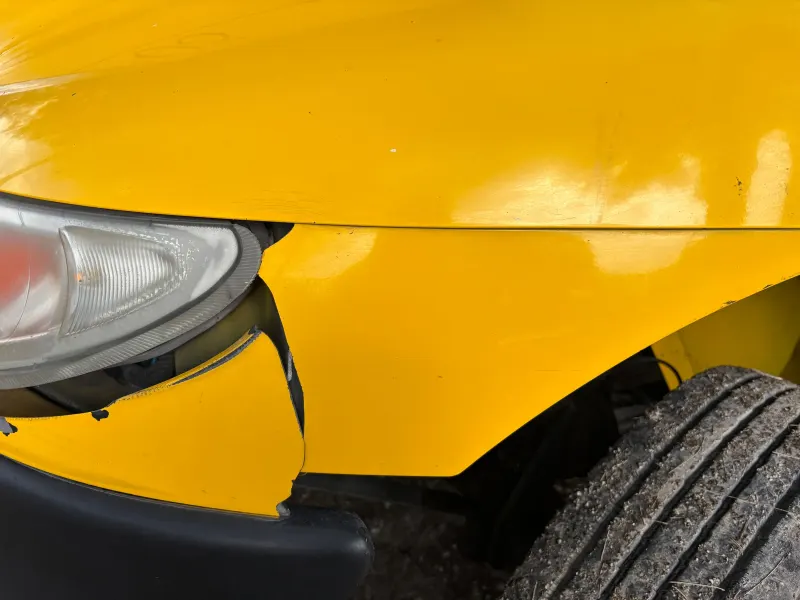
- Stone chips and rust bubbles may look small, but because bare metal is exposed underneath, they grow over time.
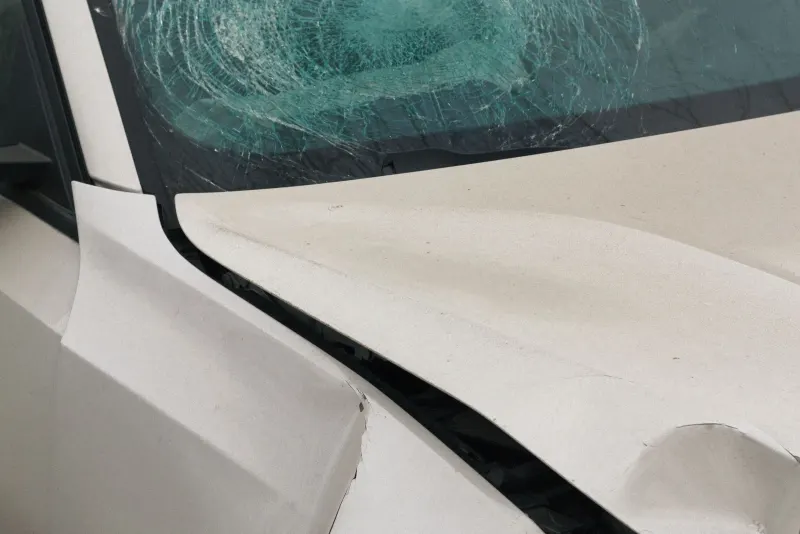
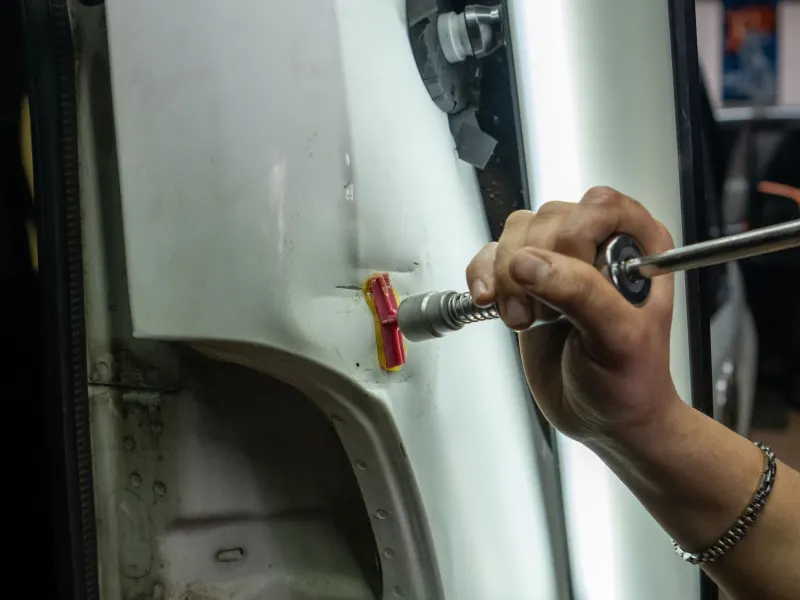
- Panels that have had body repair are painted after straightening or replacement.
For a closer look at what each symptom means, read when should car paint be renewed?
Spot repair or full panel?
A spot repair paints only the damaged area of a panel and blends it into the surrounding paint. A full-panel respray covers the whole panel. Spot repairs need less material and labour, but if the damage reaches the middle of a panel or runs onto its edges and body lines, painting the whole panel gives a cleaner result.
Pre-purchase inspection reports in Türkiye record “spot-painted” and “painted” panels separately, so we decide on the method together, based on your car’s condition and what you expect.
Why colour matching matters
Your car’s paint code is usually on a sticker on the door pillar or in the engine bay, and it is the starting point for finding the right colour. On its own, though, it isn’t enough: the same code can vary slightly in tone between production batches, and the existing paint changes over the years with sun and weather.
So the colour is adjusted by comparing it against the car’s current paint, not just the code. Where needed, the new paint is blended into the neighbouring panels so the edge between old and new can’t be seen. With metallic and pearl colours, where the pigment looks different from every angle, this step is even more delicate.
Preparation decides the result
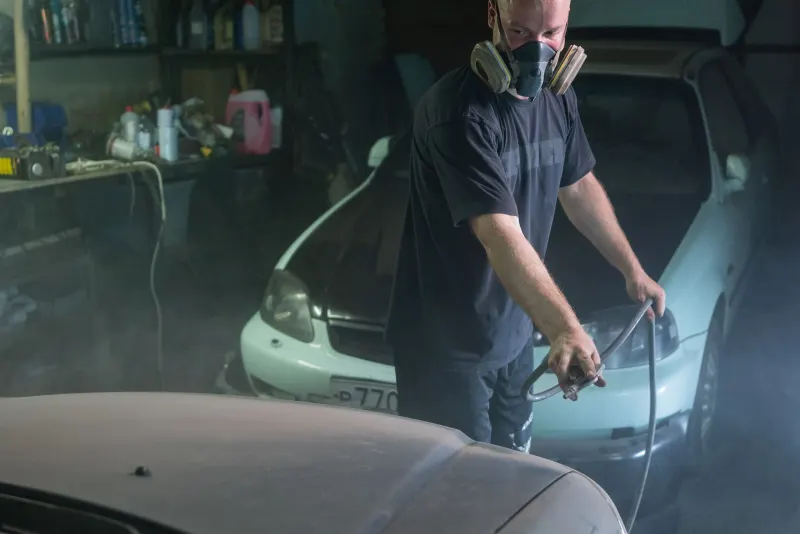
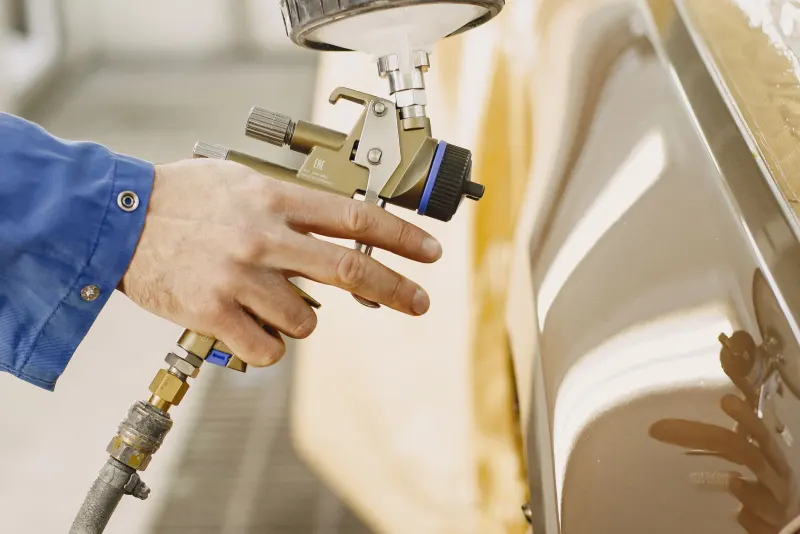
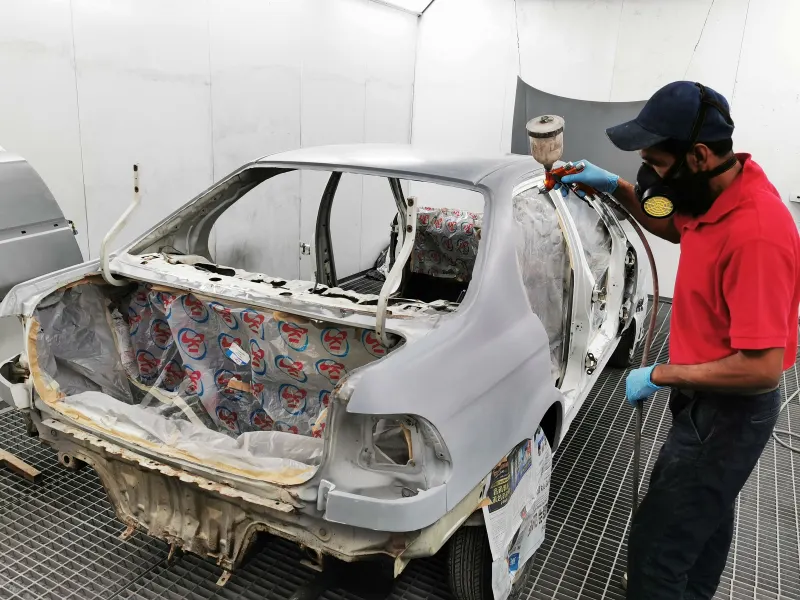
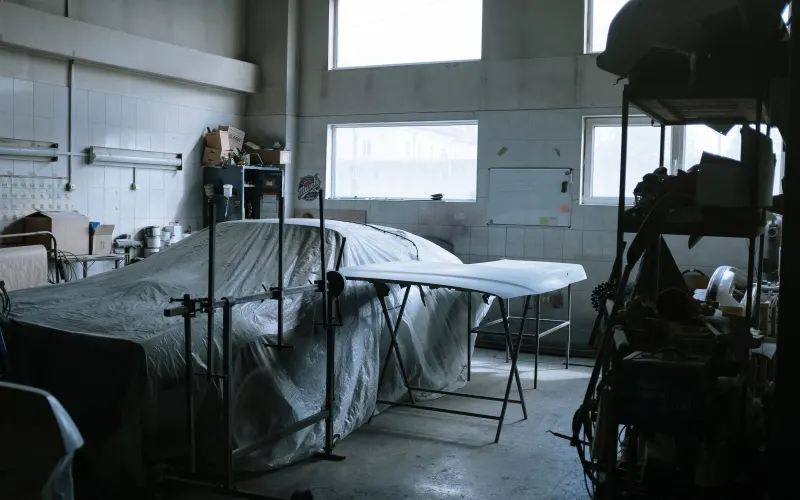
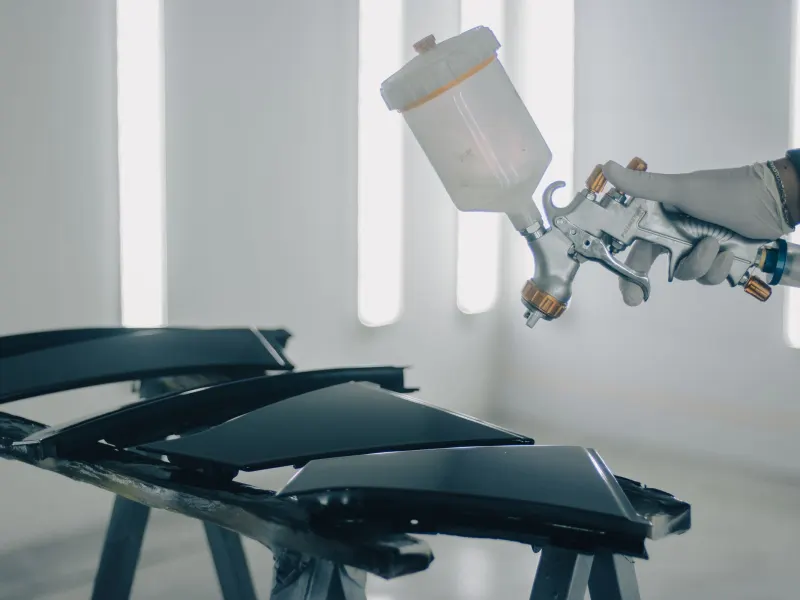
Spraying is only one part of the job. Sanding, a thin skim of filler where needed, priming, and masking everything that isn’t being painted are what make the finish smooth and durable. Applying the paint in a clean, controlled environment and letting it cure properly also directly affects the surface quality.
If there are dents or distortion, body repair comes first — paint on an uneven surface doesn’t hide flaws, it highlights them.
After painting
New paint may feel dry, but it takes time to reach full hardness. For the first few weeks, avoid brush-type automatic car washes and don’t hold a pressure washer too close to the panel. Ask at handover how long to wait before applying wax or any protective coating. For longer-term care, see our practical tips on how to protect your car’s paint.
How the process works
Surface check
We look at how deep the damage goes, whether the panel has other flaws, and the condition of the existing colour.
Preparation
Sanding, filler and primer where needed; every surface that isn’t being painted is masked.
Colour matching and spraying
The colour is set from the paint code and the car’s current paint, then base coat and clear coat are applied.
Curing, finishing and inspection
Once cured, the surface is checked and polished if needed, and we inspect the car with you.